




Serna Makina Short Cut Pasta Production Lines are designed to manufacture a wide variety of short-cut pasta shapes, including penne, vermicelli, fusilli, elbow macaroni, charleston, shells, mantı, and similar pasta products.
Engineered according to production capacity, product variety, and plant requirements, these systems integrate every stage of the pasta production process, from raw material feeding, dough preparation, and extrusion to drying, cooling, and storage.
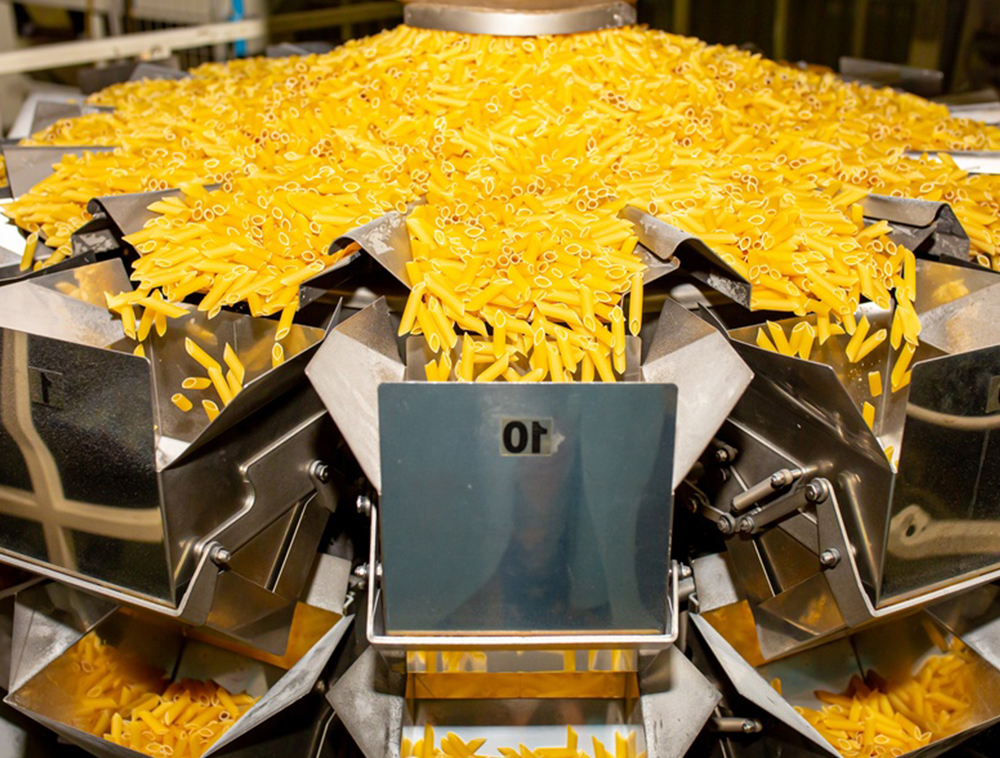
Every stage of a pasta production line operates in coordination with the others to ensure consistent quality of the final product.
Serna Makina production lines integrate mechanical equipment, process technology, and automation systems to establish continuous, controlled, and repeatable production conditions.
Through centralized production control, automated product flow, and precise management of production parameters, a flexible infrastructure is established to accommodate different production capacities and pasta varieties.
Controlled Raw Material Feeding and Dough Preparation
The production process begins with the consistent and controlled feeding of raw materials into the production line. The Raw Material Feeding Unit is designed to ensure a continuous flow of raw materials according to production capacity and process requirements.
The Press (Extruder) Unit then ensures uniform mixing, kneading, and compression of the pasta dough, shaping it into the desired forms through specially designed extrusion dies.
Controlled Production from Shaping to Drying
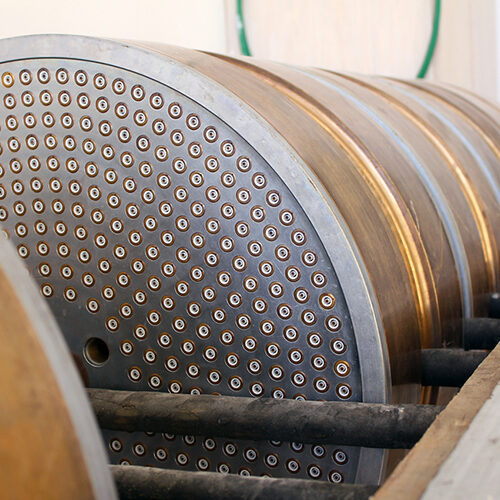
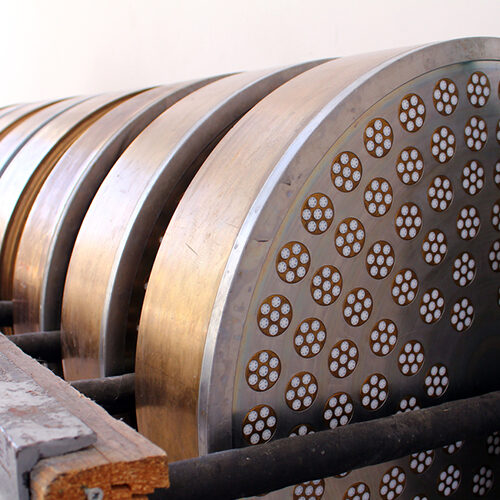
Circular pasta extrusion dies can be designed to accommodate different product shapes and dimensions. This allows production requirements to be met for both standard pasta products and a wide variety of specialized pasta shapes.
Fresh pasta exiting the extrusion dies is prepared for the subsequent drying stage by the Shaker (Trabatto) Unit. Controlled drying systems help maintain balanced temperature, humidity, and airflow conditions throughout the drying process.
For Serna Makina, a production line is not a collection of independent machines, but an integrated process system in which all components work together in coordination.
After completing the drying process, the pasta undergoes controlled cooling before being prepared for the packaging and storage stages.
Bucket elevator systems ensure gentle product transportation between different production levels while minimizing mechanical impact. Conditioning and storage silos help regulate the flow of pasta products between the production and packaging stages.
Every pasta production facility has different requirements in terms of production capacity, product variety, and plant layout. Therefore, Serna Makina production lines are engineered according to the specific production needs of each project rather than following a standard equipment configuration.
The integrated approach to design, mechanical equipment, process technology, and automation systems provides a solid foundation for more controlled, efficient, and sustainable management of the production process.